Imagine your life without the ability to go to urgent care or swing by a pharmacy to pick up necessary medicines.
For many throughout the world, medical treatment is free, but the medicines they need are unaffordable. Nearly 2 billion people have no access to basic medicines, according to the World Health Organization. When children and families are continuously ill, their entire lives are impacted. Attending work or school, supporting a family, maintaining relationships, and having hope for a bright future is a constant challenge that feels impossible to achieve.
When it comes to medical aid, Cross International has a clear perspective on the importance it plays in our overall mission to transform the poor and their communities materially and spiritually for the glory of Jesus Christ. We understand that resolving health issues is critical for other supports, like education, clean water, and housing, to be effective, and it’s why medical aid will always be an important component of the services we promote and advance through our work with local ministry partners around the world.
Working closely with local ministry partners is crucial to the success of our programs. They best understand the needs of their neighbors and the type of support that will be most effective. Our partners are deeply rooted in their communities, providing sustained support that is often key in tackling systemic underlying issues surrounding medical needs.
For more than a decade, our strategic ministry partnerships in Guatemala have helped children and families affected by poverty and abuse. One of Cross International’s largest gifts-in-kind recipients is Amigos Por La Salud y La Vida (Friends for Health and Life), an organization dedicated to providing food and medical services to fill the gaps in Guatemala’s overburdened health system. Cross International helps the organization stock the pharmacy shelves of clinics and hospitals, providing free medication to those in need. Cross International also gives donations of food to help support feeding programs that serve the 30,000 patients that visit each clinic per year, many suffering from malnutrition.
Using our holistic approach to partnerships, Cross International also comes alongside Amigos Por La Salud y La Vida to determine the most important indicators to track in providing more efficient and effective care. We are working to develop a needs-based approach to medicine and medical equipment distribution that will help us know which programs to expand and improve.
Long-term partnerships with local organizations like Amigos Por La Salud y La Vida are the hands and feet of the work we champion around the world. Through the support of generous believers like you, our local ministry partners are strengthened and empowered with hope to transform their communities with the love of Christ.
The example of Jesus: a healing touch for the hurting
A healing touch—that’s how so many people were introduced to the compassion of Jesus when he walked on earth. In the Bible, gospel stories show how Jesus was moved time and again to touch and heal those who were physically hurting: the blind, the lame, the lepers…even those at the point of death and beyond. He understood the toll of pain, and he used his ability to minister to people’s bodies as a way to introduce them to the ultimate healing he could provide their souls. This biblical example guides our work in the area of medical aid and healthcare services.
In Luke, chapter 10, Jesus told one of his most remembered parables, of one person being moved by compassion to help another in pain. The healing touch in the parable came from the good Samaritan, someone who didn’t have any relationship with the wounded man. They had never met, and the circumstances of their day would have actually created quite a distance between them, socially. But despite that, the Good Samaritan felt not only empathy for the other’s pain, he felt a responsibility to care for him. Jesus described this man tenderly dressing the wounds of the injured man, bringing him to a place of safety and rest, and paying for his ongoing care to ensure he would find his way back to health. The beautiful image Jesus creates in the story is one of sacrificial giving and true concern for a stranger.
Through His stories and His example, Jesus calls us to reach out to the world around us, offering hope and meeting others’ needs as we are able. Just as Jesus was attentive to the physical ailments of those around him, we believe it is our responsibility to understand the medical and health challenges of those we serve and to respond in compassion. It doesn’t require changing the world; it’s as simple as seeing the pain in someone’s eyes and moving forward in love. Often, those in deepest need of our help may be strangers to us, living in places of the world with challenges far greater than those we face. Even in these cases—and perhaps especially in these cases—we believe in following a simple motto: “When you can, help.”
We invite you to join us in responding to those in need of medical aid and physical healing, following Christ’s example of compassion. Would you pray for those facing disease and illness in areas around the world where barriers to healthcare are often insurmountable without the help of others? Pray that God would send the care and medicine they need. As you are able, we also invite you to join us by giving generously to the ministry of Cross International and its many local partners throughout the world, who provide much needed services, like medicine and healthcare, to those who need our help.
Our Philosophy: Strategic, Integrated, and Compassionate Medical Aid
In everything we do, we seek to serve the whole person: physically, mentally, socially, and spiritually. Whether addressing the needs of a vulnerable child, the challenges facing a family in poverty, or the issues preventing a community from thriving, we deal with specific problems with the understanding that each issue interacts with and impacts others. In this series, we focus on one specific facet of the complex challenges facing those in need around the world.
In seeking to help those in deepest need, few issues are more challenging than health and medical conditions. According to the World Health Organization, half of the world’s population lacks access to essential health services. In the developing world, the barriers to healthcare are discouraging. Availability of healthcare services is limited, physically reaching healthcare providers can be difficult, healthcare workers are inadequately trained, and the cost of medical services is very high. These barriers are intimidating–even for someone in good health.
Unfortunately, most of the world lives with these barriers. Almost 800 million people worldwide spend at least 10% of their household budget on healthcare for someone in their home. Caring for a sick child or loved one would motivate anyone to spend sacrificially to help them get well. This same dedication forces many people around the world to face tremendously hard decisions. In fact, for almost 100 million, those health expenses thrusting them into extreme poverty.
From our experiences in areas of deep need around the world, we understand that resolving health issues is critical for other services to be effective. The most thoughtful educational or vocational training programs will stall if students aren’t well enough to learn. Efforts to provide clean water and nutritious diet are also tightly interdependent with the medical issues in a home or community. This is why medical aid will always be an important component of the services we promote and advance through our work with local ministry partners around the world.
We believe medical aid for those in need should not only provide treatment, but also include disease prevention and health education. Treatment rightly focuses on existing conditions needing compassionate intervention. But sustained good health requires battling preventable diseases before they occur. Through healthcare education and sanitation best practices, we can promote the ongoing health of families and communities. We also believe in working closely with local ministry partners who best understand the needs of their own communities and the type of support that will be most effective. These partners are deeply rooted in their communities, providing a sustained support that is often key in tackling systemic underlying issues surrounding medical needs. Finally, for a thriving community, we believe it is critical to integrate medical aid efforts with other programs promoting educational, social, and spiritual well being.
These beliefs guide our three main approaches to medical aid. First, we provide ‘in-kind’ donations of medicines and medical supplies for those who may receive a medical exam or consultation only to find that the medicine they need is not available in their area or too expensive to purchase. Our local ministry partners help us identify essential medicines that are needed most, and Cross International does our best to solicit donations of those crucial supplies to provide to our local partners who serve the most vulnerable. These local partners may run medical clinics themselves, or they may provide them to regional medical network partners who also serve those who are in need. Second, when our ministry partners run medical clinics as part of their overall programming, we often support those operations. Many times, these services are not only for children in our partners’ care, but also for the community around them. Finally, as we support the vision and planning of other local partners, we encourage them to always consider medical aid and ministry in their scope. We help them understand the role of health-promoting services in their overall program success, and we help them navigate the process of assessing or developing this aspect of their ministries.
Medical aid challenges are broad-ranging and widespread, but the impact is as individual as every life that is changed through this work. As we advance services like these, we’re encouraged by the stories and faces of those children and families touched by a healing hand or strengthened by a life-giving medicine. Our goal of transformed lives is only possible when people are able to grow and thrive physically. If you haven’t yet joined us, we invite you to be a part of this exciting and meaningful partnership.
Thriving kids start with a healthy home

Chances are the floor beneath you right now is a soft carpet, beautifully stained kitchen hardwood or smooth tile, right? That solid ground within your home gives you warmth, safety from disease and danger, rest, and peace of mind for body and soul. That stable foundation is everything.
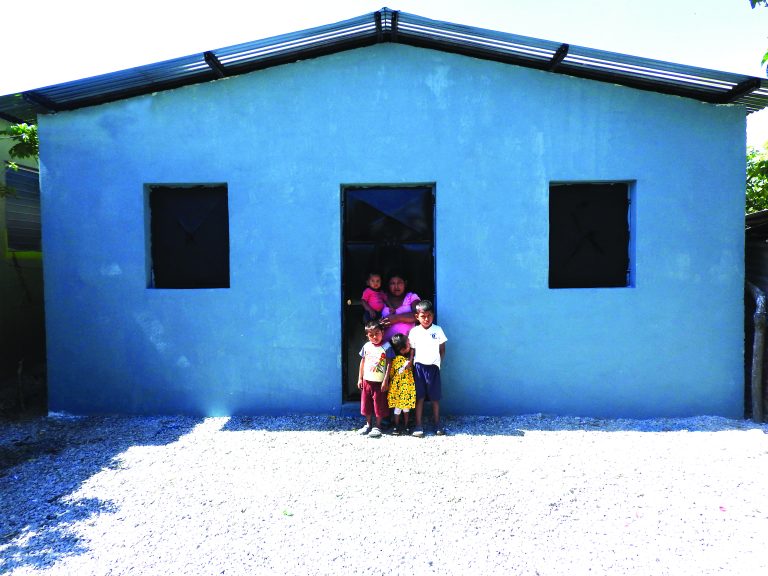
Today, 1-1.5 million Guatemalan children and their family members live in homes made of dirt floors, cornstalks, mud, sticks, and any other materials they can find. These makeshift structures leave them vulnerable to violence, theft, and diseases such as asthma, tuberculosis, influenza, anemia, and diarrhea, as well as decreased mental health.
God is helping kids thrive through your generous giving!
Thanks to generous donors like you, Cross International is doing more than just replacing dirt floors. With help from our ministry partners in Latin America and around the world, we’re providing entire, safe and secure homes for marginalized families. For example, at Hope of Life in Guatemala, we’ve already built more than 20 concrete block homes, impacting over 200 people.
As we celebrate the good your giving has provided, we cannot ignore the work still left to do. Cross International relies on local pastors and Christian leaders to help us identify which families are in the greatest need of a new home, creating the opportunity for God’s love to be shared. Telling families this help is in Jesus’ name opens their hearts and minds to receive the Gospel.
What’s under your feet matters.
Replacing a dirt floor with cement can be as good for a child’s health as nutritional supplements and as helpful for brain development as early childhood development programs. Cement reduces parasites, resulting in 13% less diarrheal disease, a 20% reduction in anemia –both life-threatening –, 30% higher scores in language and communication skills and 9% improvement in vocabulary in children under six. Not only are children better off on a strong foundation, but studies find that their mothers are less depressed, less stressed, and happier.
The impact of your donation to Thriving Kids is huge: healthy housing stabilizes lives in unimaginable ways. A lockable door protects against danger and theft. A nearby latrine reduces parasitic infections. A roof gives a family rest and shelter from driving rain. When basic needs are met, an entire community is impacted. For children and families around the world, housing is health.
Stable homes, stable families
Healthy homes change lives by creating income opportunities, advancing education, improving health, reducing crimes against women and children, strengthening faith, supporting mental health and much more.
We pray you’ll continue to support Cross International’s Thriving Kids initiative as we build homes and provide other life enhancing services for families. We believe that thriving kids need a safe home and the knowledge of God’s love. Please join us!
Nicaragua: exploring the country and its culture


For more than a decade, Cross International has partnered with local ministries in Nicaragua to serve the needs of people there. Even in the midst of working to address poverty and provide basic services, it is easy to fall in love with the beauty of the country and its culture.
Nicaragua’s culture is shaped by the history of two of its geographic areas. To the west, the Pacific lowlands’ culture reflects the area’s history of Spanish colonization. In addition to language, this region shares other cultural aspects with Spanish-speaking Latin American countries, such as the widespread practice of Catholicism. In contrast, the eastern half is shaped by its history as a former British protectorate. Similar to other current and former British colonies in the Caribbean, it is not uncommon to hear English spoken here, and many in the area practice a Protestant faith.
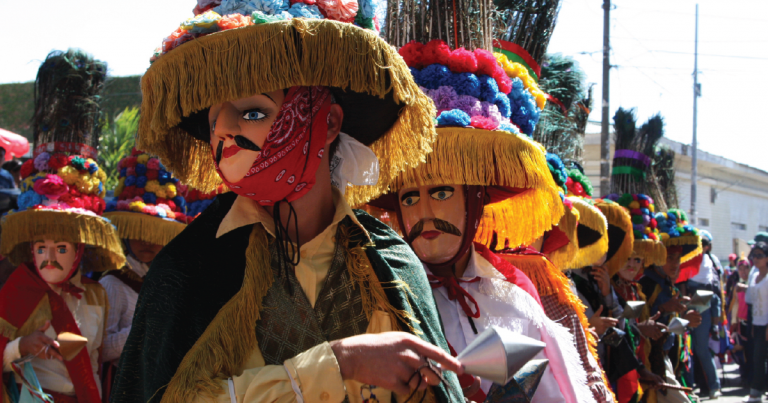
Religion is a significant influence on Nicaraguan culture, and the calendar is dominated by religious celebrations. Christmas is one of the year’s key celebrations, but an even bigger observance is the Semana Santa, or Holy Week, preceding Easter Sunday. For most Nicaraguans, this is a week-long holiday where cities shut down almost completely.
At celebrations, traditional music, dancing, plays, and ceremonies are joined with drinking and feasting, and firecrackers and rockets exploding—lasting several days and often into the early morning hours. The joy and exuberance of these displays is characteristic of Nicaraguan culture, which can be considered loud even by Latin American standards!
Special occasions and holidays are often celebrated with meals featuring meat, something that rarely appears on the everyday menu due to its cost. Grilled steak, called bistec a la parrilla, or grilled sirloin, known as lomo, are most often the focus of these celebratory meals.
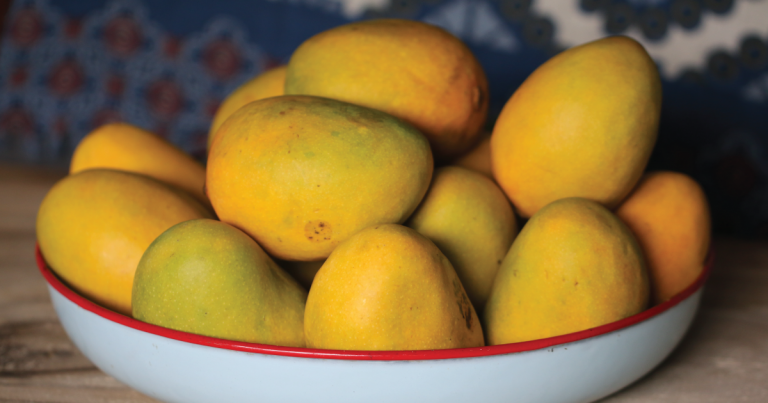
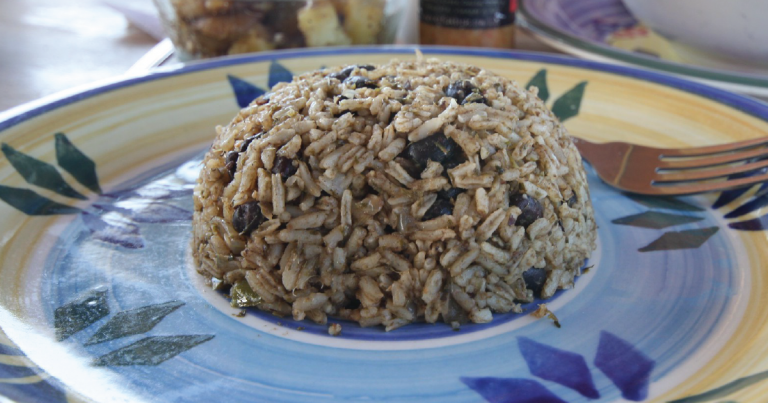
The most common staple foods in the Nicaraguan diet are corn and beans, with beans eaten daily as the main source of protein. Rice plays a major role in the cuisine as well, and the country’s most popular dish, gallo pinto (or “spotted rooster”), includes both beans and rice. The dish is made with red beans refried with onions, garlic, and rice, and is eaten at all times of day. The country’s most popular fruits, mangoes and plantains, are plentiful. Yucca root, the vegetable most commonly enjoyed in Nicaragua, is often paired with pieces of pork, pork rinds, and greens. Tortillas are served with most meals, and often they’re used in place of utensils to scoop food.
Corn and tortillas also play a role in two common Nicaraguan beverages. The national drink is pinol, which is made from corn flour and water. Similar to this is tiste, which is made from ground tortillas and cacao. Tiste is enjoyed at either room temperature or served cold.
But the most common beverage enjoyed throughout the country should be familiar to many in North America: coffee. In the mornings, coffee is mixed with hot milk for a steaming breakfast drink. The rest of the day, it is enjoyed black and with a bit of sugar.
So, the next time you enjoy a cup of coffee—no matter how you take it—it can be a reminder of the best that Nicaragua has to offer and the goodness found in that country. When you remember Nicaragua, please remember Cross International and our ministry partners, too, and say a prayer for the important work that is happening there.
Partners in Ministry for Nicaragua’s future
The country of Nicaragua has been a priority for Cross International since 2006, when we expanded our reach into Central and South America. A stunningly beautiful country, Nicaragua is also a place of tremendous need. It is the second poorest country in the western hemisphere with severe poverty and lack of services to meet basic human needs, like clean water, education, health care, and a sustaining working wage. Almost half of Nicaraguans live below the poverty line, and protests and unrest in 2018 have made the last several years particularly difficult.
But to Cross International, Nicaragua is also a place of tremendous opportunity. Zach Oles, Cross International’s Director of International Programs, sees the potential for change when he looks at the strong partnerships with local ministry partners there. “What makes these projects in Nicaragua so exciting to me is seeing these larger, long-term, holistic, community-based programs working to solve generational issues,” he says.
Looking at Cross International’s partners in Nicaragua—Amigos for Christ, Arms of Love, Agros, and Rainbow Network—it is easy to see why their work is so inspiring.
Amigos for Christ
A Cross International ministry partner for more than 10 years, Amigos for Christ is based in Chinandega, in northwest Nicaragua. They practice being vecinos, or “good neighbors,” building trust with rural communities in order to develop local leadership, build infrastructure, and provide critically important education.
Last year, Cross International partnered with Amigos for Christ to address a startling need in La Danta, a village of 96 families where 100% of the drinking water supply was contaminated. Together, the project funded a new well, provided a 10,000 gallon water tank, hand-dug 5-miles of trenches, and installed pipes enabling clean water to flow to all 576 people in the village.
Clean water is only one part of Amigos for Christ’s “Plan 7,” a community development plan that also focuses on healthcare, education, and economic development to systematically support communities toward sustained prosperity over a seven-year period. Their slogan? Juntos, or “together” in English. It’s an approach to partnership that Cross International is proud to support.
Arms of Love
Arms of Love is another ministry Cross International is proud to have partnered with since 2006. Located in Jinotepe, an old coffee plantation located a little more than an hour from the capital city of Managua, Arms of Love has created an orphanage and community center that are an oasis for abandoned and vulnerable children.
In addition to a residential program for orphans, more than 50 local children attend daily after-school activities, devotions, and supplemental educational training. Arms of Love seeks to show Christ’s love to every child, many of whom come from abusive and traumatic situations.
Often, staff members like cooks and security guards have as much free time to talk with the children as social workers do, so every staff member is trained in how to deal with kids healing from traumatic experiences. As part of Cross International’s ongoing commitment to helping kids thrive, we are partnering with Arms of Love to train their staff to provide the maximum level of services to children.
Agros International
While Agros International is a newer Cross International partner, their work is just as exciting. Agros provides livelihood assistance to families struggling to break the cycle of poverty. Often, hard-working couples in Nicaragua are only able to find work as day laborers, earning a fraction of what they need and unable to gain a financial foothold.
In partnership with Cross International, Agros builds communities, complete with a school and health clinic, where families have access to land, housing, and education about climate-smart farming and how to sell their harvests to larger markets. This enables families to double and triple typical yields and income through what they’ve been taught about crop selection, irrigation, and other techniques. As a result, families are able to pay their modest mortgages and eventually own their own homes and farms for the first time.
That was the story of Nolan, a husband and father of two who had been struggling to make ends meet. Before joining an Agros village, the most he had ever made was $1000 a year. Now, he makes 3 times that amount, as he lives and works on his very own four acres of land. It’s exactly the kind of success the Cross International and Agros partnership is designed to support.
Rainbow Network
The Rainbow Network is a long-term Cross International partner in Nicaragua. Their focus is long-term engagement and support of local community efforts, and their outreach expands into dozens of communities throughout the country. They provide housing, clean water, education, and microloan assistance to populations who wouldn’t otherwise have access to these vital services and opportunities. In the past, Cross International has been able to partner with Rainbow Network in a variety of ways, from buying land and providing small mortgages to encourage first-time home ownership, to providing free healthcare, to education support that ensures all children are attending school, to stocking pharmacy shelves so communities have the medicines they need.
In each partnership, Cross International sees a confident hope in the future of this nation. “The need is great, and in order to make a true difference you need to have a long-term investment and vision there,” Zach says, “and that’s where we want to be. It’s why we partner with who we partner with in Nicaragua—those who share our focus.” By giving to Cross International, you have the opportunity to join in this partnership and be part of long-term transformation for the people of Nicaragua.
In the battle for forgotten children, Cross International is fighting back


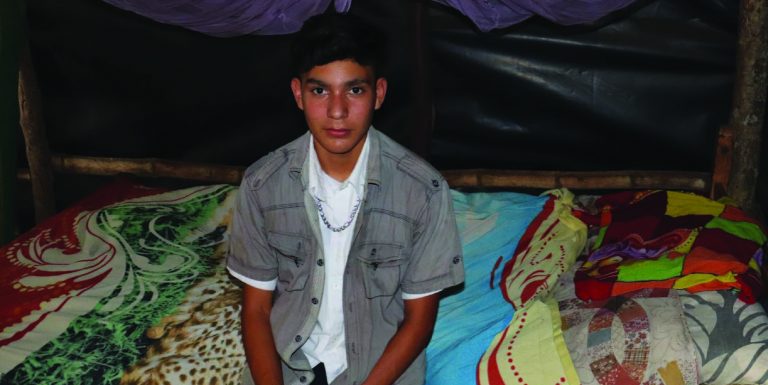
On paper, Kevin is typical preteen. He gets A’s in English class, is social and kind, loves his family and consistently offers to help others. However, Kevin’s life is anything but typical. He lives alone in a small plastic tarp structure in Jinotepe, Nicaragua, the second poorest country in the Western Hemisphere, because his home wasn’t safe.
From trauma to triumph
Like over 700,000 other children in Nicaragua, extreme poverty leaves Kevin vulnerable to trafficking, abuse, neglect and malnourishment. At 12 years old, Kevin made the heartbreaking decision to leave his mom, sister and home for a place of safety, security and refuge: Arms of Love. Where some see despair, Kevin found hope.
Kevin finds healing, encouragement, nourishment, friendship, safety and education for both mind and heart at Arms of Love, a Cross International Partner. Arms of Love gives orphaned, abandoned and abused children in Nicaragua a home, a family and a future, with the hope that they will become the leaders of tomorrow in their communities and churches.
Kevin is thriving in school today. He receives trauma therapy, is more outgoing and has meaningful, Christ-centered relationships. Kevin volunteers to help out whenever he can, and depends on Arms of Love every day for lunch and dinner.
Empowering Thriving Kids to impact the world
Nicaragua was one of the fastest-growing economies in Central America until political unrest and violence exploded in April 2018. Today, over half of the population lives in extreme poverty, without access to clean water, electricity, education and medical care. Children are most affected, putting them at risk to human trafficking, abuse, malnutrition and child labor.
Arms of Love seeks out needy children like Kevin to care for: vulnerable, separated from their parents due to death, abandonment and/or abuse, and victims of oppression, exploitation and injustice. Today, Arms of Love is home to 30 orphaned, abandoned and abused children. 51 kids from 45 families in need find support through the Community Development Program and 15 students are learning to break the cycle of poverty in the Independent Living Program. Yet there are over 700,000 vulnerable children in Nicaragua.
With your ongoing support, more children will have a safe place to grow and flourish, more students will create a better life for the next generation, staff will be better equipped in trauma therapy, and Kevin’s community will reach the next level of growth and care.
Fighting for the forgotten children
We believe every child deserves a safe place to live. When you support Arms of Love, you help create a loving, Christ-centered environment for children who have experienced severe trauma. Together, we can live out God’s command to love thy neighbor and help transform neglected children into Thriving Kids.
Through God’s adoptive and unconditional love, Nicaragua’s forgotten children can become Thriving Kids. We pray you’ll consider monthly support so kids in need like Kevin can feel value, purpose, equipped and empowered to lead communities, churches and the world.
Malawi: the Warm Heart of Africa


Malawi is widely known as the “Warm Heart of Africa” because of the generosity and kindness of its people. With a predominantly rural population of more than 18 million people, Malawi is made up of friendly tribes and ethnic groups living in traditional villages.
On a visit to one of these villages, you would see women wearing the traditional colorful sarong-like wraps, called Chitenjes. Women wear as many as three of these versatile wraps at a time, using them as skirts, headdresses, aprons, or to carry infants on their backs while shopping, carrying water, or working in the garden. Often, the Chitenjes color identifies a woman’s home: red to represent the north, blue for the central region, and green for the south. Men dress in typical western style, wearing jeans, pants, shirts, or suits, but shoes are rarely seen, even in cities, as they are quite expensive.
Family is very important in Malawi, and village life centers around it. Agricultural villages work to grow crops and tend livestock, and fishing villages line the shores of Lake Malawi. In these villages, extended families typically live closely together in huts built next to, or even adjoining, each other. These huts, made of sticks and mud and thatched or corrugated iron roofs, are home to family members who share everything from work to resources, caring for the elderly and raising children together. Cross International partners in Malawi work to support these hard-working people through medical care and microenterprise programs to enable adults to improve agricultural practices and establish businesses to provide for their families.
Providing food has been a particular challenge for families in Malawi, where persistent drought has significantly limited the harvest and made clean water scarce, meaning water must often be carried over a great distance for cooking. Both water and corn are needed to prepare Nsima, the core of Malawi’s cuisine. This thick porridge is made with maize flour and water and is often paired with beans, greens, tomato-and-onion salad, or other vegetables. Rice, potatoes, and cassava are common, and occasionally, meat such as chicken, goat, or pig will round out the meal. Fish is also a staple along the coastline of Lake Malawi. To help during these challenging times when these traditional foods are scarce, nutritious balanced meals are offered to orphans and vulnerable children as part of educational programs at the Ambuya Development Center, a Cross International partner.
In every aspect of this African nation’s culture, its richness and beauty is a reflection of its most precious resource—the vibrant, loving people of Malawi. Cross International is proud to come alongside these amazing people through partnerships that minister to one child and one family at a time.
- « Previous Page
- 1
- …
- 4
- 5
- 6
- 7
- Next Page »