In everything we do, we seek to serve the whole person: physically, mentally, socially, and spiritually. Whether addressing the needs of a vulnerable child, the challenges facing a family in poverty, or the issues preventing a community from thriving, we deal with specific problems with the understanding that each issue interacts with and impacts others. In this series, we focus on one specific facet of the complex challenges facing those in need around the world.
There is no greater passion at Cross International than to care for vulnerable children. It’s at the heart of everything we do. While we care for all those in deep need around the world, these little ones uniquely need our focused attention and commitment. Even without a global pandemic like COVID-19 or a natural disaster, these precious lives face tremendous challenges. For that reason, every ministry we support has the ultimate goal of benefiting those at greatest risk: vulnerable children.
You may not be familiar with the term ‘vulnerable children.’ It is used to describe kids at high risk of lacking adequate care and protection. Often, these children are orphans, either because one or both parents have died, or—in the case of ‘social orphans’—because they’ve been abandoned by parents who are living but unable or unwilling to support them. These precious little ones have no reliable social safety network to depend on to protect them. You may know of vulnerable children in your own community, whether as the result of abuse, divorce, or unemployment. Consider the additional risks vulnerable children face in developing areas of the world. For example, lack of food, clean water, and adequate housing can lead to illness, keeping kids from the education they need to support themselves in the future. During times of uncertainty like we are facing with the coronavirus, these children have no one to look after them. These situations affect us like we imagine they affect you: they break our hearts and drive us to action.
Quick action is needed, but there isn’t a quick fix. Supporting these kids requires a long-term plan that addresses the complexity of the problems with integrated solutions. Our approach meets vulnerable children’s immediate needs for nutritious food, clean water, safe homes, healthcare, and education. But it doesn’t stop there. We also consider the ability of families and communities to provide ongoing, stable environments for these little ones—not only during childhood, but also to provide the promise of opportunities when they grow up. Perhaps most importantly, we support parents and families facing crisis in order to help prevent the problems that lead to children being abandoned in the first place, keeping families thriving and together, where they belong.
As you can see, this is a big task. That’s why orphans and vulnerable children are a strategic priority for Cross International. Our focus on these children is a pervasive and all-encompassing theme for what we do with our ministry partners. With your support, these ministry efforts not only help kids thrive, they help families flourish and communities get stronger.
Many of our ministry partnerships directly serve children who are vulnerable. Orphanage and childcare ministry partners provide homes for orphaned or abandoned children, often placing them in family-like groups where they can feel secure and supported. Many of our ministry partners provide feeding programs alongside educational services for children, nourishing both their bodies and their minds. Special education and physical therapy for those with unique challenges or disabilities further care for those who otherwise would not receive the help they need. Often—and by design—these ministry partners extend their services to benefit not only vulnerable children, but also other children in the community in need of assistance.
Ministry partners providing family and community services also benefit vulnerable children by strengthening the social networks around kids, providing stability and opportunity. This helps children who are already at risk, as well as preventing situations that might result in children being abandoned. Vocational training, adult literacy programs, and micro-loans help parents gain the economic strength and stability they need to build thriving families. Our ministry partners often provide training for parents to help them understand how to care for their children’s health and wellbeing. Community services, such as medical clinics, medicines and medical donations, clean-water wells, and water delivery systems, all create healthier, stronger communities. And that directly impacts vulnerable children in the area as well.
When it comes to helping these vulnerable children, we are compelled by the need we see and by our belief–based on years of experience and evidence–that we can make a difference for these little ones. Perhaps more importantly, we’re compelled by the consistent call in the Bible to protect and care for those who are orphans. With the current C19 pandemic, our work is both more important than ever and more challenging than ever. Will you partner with us in answering the call and responding to both the need and the opportunity? We would be honored to partner with you in serving these precious vulnerable children!
Our Philosophy: Serving those in need More Than Ever in response to COVID-19
In everything we do, we seek to serve the whole person: physically, mentally, socially, and spiritually. Whether addressing the needs of a vulnerable child, the challenges facing a family in poverty, or the issues preventing a community from thriving, we deal with specific problems with the understanding that each issue interacts with and impacts others. In this series, we focus on one specific facet of the complex challenges facing those in need around the world.
Without a doubt, the COVID-19 crisis is truly unprecedented. The situation is changing rapidly, and like everyone, we’re adjusting and changing with it. What hasn’t changed is our commitment: we remain focused on serving those in need around the world, working closely with our local ministry partners. The complications and barriers created by this pandemic have only added to our challenges, which were already daunting. But far from being discouraged, we are strengthening our resolve and asking our donors and partners to join us in this work, now more than ever.
Our first step in crisis response is to work with ministry partners to identify their needs. You can imagine the devastating impact of the coronavirus pandemic for those who live in impoverished communities that are already without any safety net of social services. In communities like these, living on the edge is a daily reality, and the COVID-19 crisis has pushed resources to the limit:
- Shelter: Because so many live without adequate housing, they don’t have a safe place to ‘shelter-at-home.’ Women and children in situations of domestic abuse are particularly vulnerable, as their options to find refuge in a shelter are restricted by quarantines.
- Food: As schools shut down, many children miss their main–or only–meal of the day. Families who depend on food distributions are unable to receive meals and are finding it difficult to gather food.
- Healthcare: Social distancing is restricting access to already limited healthcare resources, and medical teams aren’t able to complete their usual child rescue operations. The meager healthcare systems in these countries risk being quickly overtaken by the needs of COVID-19 patients as the pandemic develops.
- Orphanages: Children in orphanages are at higher risk for the potential spread of the virus, due to their close living conditions. Quarantine orders have essentially locked out orphanage workers who live in the surrounding community. Only a handful of residential staff remain to keep the children safe, fed, healthy, and occupied.
- Clean water: For many in developing countries, accessing water is a community activity that is greatly impeded by the need for social distancing around wells or communal water sources.
- Education: Schools and educational programs have been closed due to necessity, and teaching through technology is not an option for the vast majority.
- Unemployment: Those who do not have stable or consistent employment in impoverished areas are in precarious financial situations, and unemployment relief from the government is not likely.
- Ministry Support: Many ministry partners are largely supported through church mission trips, which have seen a drastic reduction as all foreseeable trips have been cancelled. As a result, many ministries have already been forced to let go hundreds of workers, and more layoffs are expected.
Like the COVID-19 crisis, the scope and scale of these needs are unprecedented. Our ministry partners are facing challenges they’ve never faced before. They are needing to not only address the reality of the coronavirus, they also need to ensure their essential ministry services are able to continue. We are collaborating with them closely to create highly adaptable plans that will allow us to adjust as the crisis unfolds.
Our strategy in response to the coronavirus is to prevent and prepare. We are ensuring that best practices in social distancing and hand-washing are being followed as best as possible within the context of ministry partners’ limited resources. We’re reinforcing proper hygiene practices and taking sanitation precautions to limit the spread of the virus. Given that the spread of the virus is expected to increase, we are also focusing on procuring medical supplies and helping our partners take measures to mitigate the impact to their workers and those they serve.
We’re also helping our partners explore options and think through ways their ministry methods should evolve as we learn more about this pandemic. Women’s support groups in Malawi and Zambia are using the few cell phones available to coordinate distribution of goods. New, innovative feeding programs are being drafted to serve poor and rural communities while supporting social distancing. Orphanage workers in quarantine are taking on multiple roles, finding ways to not only fill in as cleaning staff and cooks, but to continue 2-hour tutor sessions each day for the children.
One of our priorities in the midst of the COVID-19 crisis is to stay connected with you, our donors and supporters. We know you want to stay up-to-date about these financial and situational needs and how Cross International is engaging around the world. As we share this information with you, please consider giving today to help us meet these unprecedented needs.
We understand that this pandemic is affecting so many families, including many of our generous and faithful donors. Please let us know how we can best pray for you, as we regularly remember you in our prayers. For we know that despite these challenges, God remains sovereign. We and our ministry partners continue to rely on God for our comfort and provision, and we encourage you to do the same!
Our Philosophy: Strategic, Integrated, and Compassionate Medical Aid
In everything we do, we seek to serve the whole person: physically, mentally, socially, and spiritually. Whether addressing the needs of a vulnerable child, the challenges facing a family in poverty, or the issues preventing a community from thriving, we deal with specific problems with the understanding that each issue interacts with and impacts others. In this series, we focus on one specific facet of the complex challenges facing those in need around the world.
In seeking to help those in deepest need, few issues are more challenging than health and medical conditions. According to the World Health Organization, half of the world’s population lacks access to essential health services. In the developing world, the barriers to healthcare are discouraging. Availability of healthcare services is limited, physically reaching healthcare providers can be difficult, healthcare workers are inadequately trained, and the cost of medical services is very high. These barriers are intimidating–even for someone in good health.
Unfortunately, most of the world lives with these barriers. Almost 800 million people worldwide spend at least 10% of their household budget on healthcare for someone in their home. Caring for a sick child or loved one would motivate anyone to spend sacrificially to help them get well. This same dedication forces many people around the world to face tremendously hard decisions. In fact, for almost 100 million, those health expenses thrusting them into extreme poverty.
From our experiences in areas of deep need around the world, we understand that resolving health issues is critical for other services to be effective. The most thoughtful educational or vocational training programs will stall if students aren’t well enough to learn. Efforts to provide clean water and nutritious diet are also tightly interdependent with the medical issues in a home or community. This is why medical aid will always be an important component of the services we promote and advance through our work with local ministry partners around the world.
We believe medical aid for those in need should not only provide treatment, but also include disease prevention and health education. Treatment rightly focuses on existing conditions needing compassionate intervention. But sustained good health requires battling preventable diseases before they occur. Through healthcare education and sanitation best practices, we can promote the ongoing health of families and communities. We also believe in working closely with local ministry partners who best understand the needs of their own communities and the type of support that will be most effective. These partners are deeply rooted in their communities, providing a sustained support that is often key in tackling systemic underlying issues surrounding medical needs. Finally, for a thriving community, we believe it is critical to integrate medical aid efforts with other programs promoting educational, social, and spiritual well being.
These beliefs guide our three main approaches to medical aid. First, we provide ‘in-kind’ donations of medicines and medical supplies for those who may receive a medical exam or consultation only to find that the medicine they need is not available in their area or too expensive to purchase. Our local ministry partners help us identify essential medicines that are needed most, and Cross International does our best to solicit donations of those crucial supplies to provide to our local partners who serve the most vulnerable. These local partners may run medical clinics themselves, or they may provide them to regional medical network partners who also serve those who are in need. Second, when our ministry partners run medical clinics as part of their overall programming, we often support those operations. Many times, these services are not only for children in our partners’ care, but also for the community around them. Finally, as we support the vision and planning of other local partners, we encourage them to always consider medical aid and ministry in their scope. We help them understand the role of health-promoting services in their overall program success, and we help them navigate the process of assessing or developing this aspect of their ministries.
Medical aid challenges are broad-ranging and widespread, but the impact is as individual as every life that is changed through this work. As we advance services like these, we’re encouraged by the stories and faces of those children and families touched by a healing hand or strengthened by a life-giving medicine. Our goal of transformed lives is only possible when people are able to grow and thrive physically. If you haven’t yet joined us, we invite you to be a part of this exciting and meaningful partnership.
Partners in Ministry for Nicaragua’s future
The country of Nicaragua has been a priority for Cross International since 2006, when we expanded our reach into Central and South America. A stunningly beautiful country, Nicaragua is also a place of tremendous need. It is the second poorest country in the western hemisphere with severe poverty and lack of services to meet basic human needs, like clean water, education, health care, and a sustaining working wage. Almost half of Nicaraguans live below the poverty line, and protests and unrest in 2018 have made the last several years particularly difficult.
But to Cross International, Nicaragua is also a place of tremendous opportunity. Zach Oles, Cross International’s Director of International Programs, sees the potential for change when he looks at the strong partnerships with local ministry partners there. “What makes these projects in Nicaragua so exciting to me is seeing these larger, long-term, holistic, community-based programs working to solve generational issues,” he says.
Looking at Cross International’s partners in Nicaragua—Amigos for Christ, Arms of Love, Agros, and Rainbow Network—it is easy to see why their work is so inspiring.
Amigos for Christ
A Cross International ministry partner for more than 10 years, Amigos for Christ is based in Chinandega, in northwest Nicaragua. They practice being vecinos, or “good neighbors,” building trust with rural communities in order to develop local leadership, build infrastructure, and provide critically important education.
Last year, Cross International partnered with Amigos for Christ to address a startling need in La Danta, a village of 96 families where 100% of the drinking water supply was contaminated. Together, the project funded a new well, provided a 10,000 gallon water tank, hand-dug 5-miles of trenches, and installed pipes enabling clean water to flow to all 576 people in the village.
Clean water is only one part of Amigos for Christ’s “Plan 7,” a community development plan that also focuses on healthcare, education, and economic development to systematically support communities toward sustained prosperity over a seven-year period. Their slogan? Juntos, or “together” in English. It’s an approach to partnership that Cross International is proud to support.
Arms of Love
Arms of Love is another ministry Cross International is proud to have partnered with since 2006. Located in Jinotepe, an old coffee plantation located a little more than an hour from the capital city of Managua, Arms of Love has created an orphanage and community center that are an oasis for abandoned and vulnerable children.
In addition to a residential program for orphans, more than 50 local children attend daily after-school activities, devotions, and supplemental educational training. Arms of Love seeks to show Christ’s love to every child, many of whom come from abusive and traumatic situations.
Often, staff members like cooks and security guards have as much free time to talk with the children as social workers do, so every staff member is trained in how to deal with kids healing from traumatic experiences. As part of Cross International’s ongoing commitment to helping kids thrive, we are partnering with Arms of Love to train their staff to provide the maximum level of services to children.
Agros International
While Agros International is a newer Cross International partner, their work is just as exciting. Agros provides livelihood assistance to families struggling to break the cycle of poverty. Often, hard-working couples in Nicaragua are only able to find work as day laborers, earning a fraction of what they need and unable to gain a financial foothold.
In partnership with Cross International, Agros builds communities, complete with a school and health clinic, where families have access to land, housing, and education about climate-smart farming and how to sell their harvests to larger markets. This enables families to double and triple typical yields and income through what they’ve been taught about crop selection, irrigation, and other techniques. As a result, families are able to pay their modest mortgages and eventually own their own homes and farms for the first time.
That was the story of Nolan, a husband and father of two who had been struggling to make ends meet. Before joining an Agros village, the most he had ever made was $1000 a year. Now, he makes 3 times that amount, as he lives and works on his very own four acres of land. It’s exactly the kind of success the Cross International and Agros partnership is designed to support.
Rainbow Network
The Rainbow Network is a long-term Cross International partner in Nicaragua. Their focus is long-term engagement and support of local community efforts, and their outreach expands into dozens of communities throughout the country. They provide housing, clean water, education, and microloan assistance to populations who wouldn’t otherwise have access to these vital services and opportunities. In the past, Cross International has been able to partner with Rainbow Network in a variety of ways, from buying land and providing small mortgages to encourage first-time home ownership, to providing free healthcare, to education support that ensures all children are attending school, to stocking pharmacy shelves so communities have the medicines they need.
In each partnership, Cross International sees a confident hope in the future of this nation. “The need is great, and in order to make a true difference you need to have a long-term investment and vision there,” Zach says, “and that’s where we want to be. It’s why we partner with who we partner with in Nicaragua—those who share our focus.” By giving to Cross International, you have the opportunity to join in this partnership and be part of long-term transformation for the people of Nicaragua.
In the battle for forgotten children, Cross International is fighting back
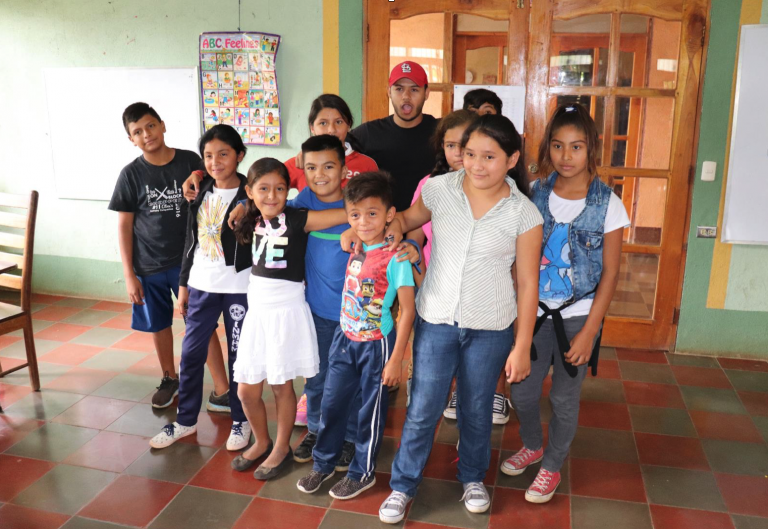
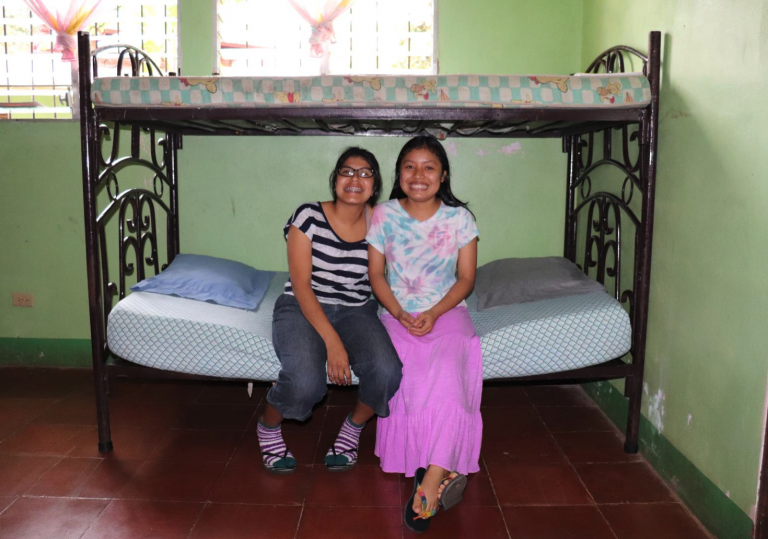
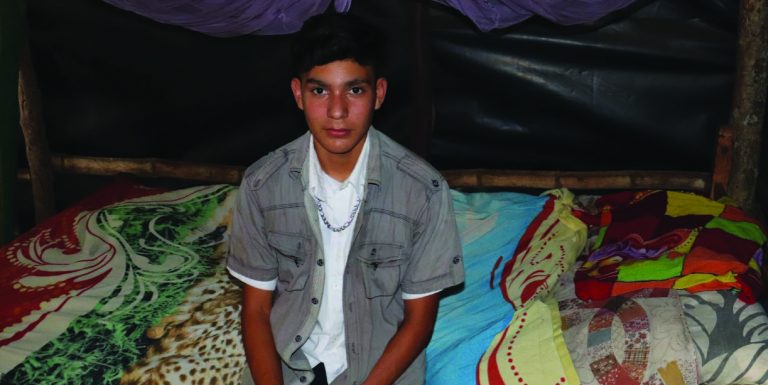
On paper, Kevin is typical preteen. He gets A’s in English class, is social and kind, loves his family and consistently offers to help others. However, Kevin’s life is anything but typical. He lives alone in a small plastic tarp structure in Jinotepe, Nicaragua, the second poorest country in the Western Hemisphere, because his home wasn’t safe.
From trauma to triumph
Like over 700,000 other children in Nicaragua, extreme poverty leaves Kevin vulnerable to trafficking, abuse, neglect and malnourishment. At 12 years old, Kevin made the heartbreaking decision to leave his mom, sister and home for a place of safety, security and refuge: Arms of Love. Where some see despair, Kevin found hope.
Kevin finds healing, encouragement, nourishment, friendship, safety and education for both mind and heart at Arms of Love, a Cross International Partner. Arms of Love gives orphaned, abandoned and abused children in Nicaragua a home, a family and a future, with the hope that they will become the leaders of tomorrow in their communities and churches.
Kevin is thriving in school today. He receives trauma therapy, is more outgoing and has meaningful, Christ-centered relationships. Kevin volunteers to help out whenever he can, and depends on Arms of Love every day for lunch and dinner.
Empowering Thriving Kids to impact the world
Nicaragua was one of the fastest-growing economies in Central America until political unrest and violence exploded in April 2018. Today, over half of the population lives in extreme poverty, without access to clean water, electricity, education and medical care. Children are most affected, putting them at risk to human trafficking, abuse, malnutrition and child labor.
Arms of Love seeks out needy children like Kevin to care for: vulnerable, separated from their parents due to death, abandonment and/or abuse, and victims of oppression, exploitation and injustice. Today, Arms of Love is home to 30 orphaned, abandoned and abused children. 51 kids from 45 families in need find support through the Community Development Program and 15 students are learning to break the cycle of poverty in the Independent Living Program. Yet there are over 700,000 vulnerable children in Nicaragua.
With your ongoing support, more children will have a safe place to grow and flourish, more students will create a better life for the next generation, staff will be better equipped in trauma therapy, and Kevin’s community will reach the next level of growth and care.
Fighting for the forgotten children
We believe every child deserves a safe place to live. When you support Arms of Love, you help create a loving, Christ-centered environment for children who have experienced severe trauma. Together, we can live out God’s command to love thy neighbor and help transform neglected children into Thriving Kids.
Through God’s adoptive and unconditional love, Nicaragua’s forgotten children can become Thriving Kids. We pray you’ll consider monthly support so kids in need like Kevin can feel value, purpose, equipped and empowered to lead communities, churches and the world.
Bringing Life-Giving Water to Zambia


It’s the middle of the night. Your child wakes you up to tell you she’s thirsty. What do you do? Most likely you stumble to the kitchen, turn on the tap, and fill up a cup. Too often, we take our ability to easily meet our basic needs for granted.
Eunice, a mother in eastern Zambia, doesn’t.
She still remembers getting up at 2 a.m. every morning to line up in the dark at her local open well. If she overslept, there wouldn’t be water left to bring home to her children. The worst part about this arduous chore? The water she and her neighbors competed for wasn’t even clean. It made her children sick. It made their friends sick. But it was the only water they had.
Eunice is not alone in her daily quest to find clean water for her family. Only 44 percent of rural Zambians have access to basic safe drinking water services. Only 19 percent have basic sanitation (toilet) facilities. And only 5 percent have easy access to soap and water to wash their hands.
This lack of water, sanitation and hygiene (WASH) resources is the leading cause of death for young children in sub-Saharan Africa, because it causes diseases like cholera and diarrhea. Poor sanitation is also partly to blame for Zambia’s high child stunting (impeded growth and development) rates. And the lack of WASH facilities in schools keeps students, especially girls, from attending, leading to more teen pregnancies, earlier marriages and limited access to quality jobs.
Health, education, employment—clean water affects every area of life.
That’s why Cross International supports partner organizations like the Kachere Development Program, a church-based ministry that installs community water systems, trains female entrepreneurs, and distributes Bibles in local languages.
Thanks to Cross International donors’ generosity, Eunice’s village now has a working well with clean, drinkable water.
She no longer has to get up in the middle of the night to fetch water. She doesn’t have to give her children dirty water to keep them alive today that would only make them sick tomorrow.
In light of this gift, Eunice gave back, too. She joined her local V-WASH (Village Water, Sanitation and Hygiene) Committee to help maintain the well and teach her community healthy WASH practices. They also gather to study the Bible and give thanks to God, the Source of both clean water and “living water.”
Because of the generous gifts of believers like you, Eunice’s children—and the children of her entire village— are growing up healthy, hopeful, learning and loved. Can you help us share God’s love with more children like Eunice’s? We’re raising $515,000 to reach 15,000 children and their family members this holiday season.
Sources: “Water, Sanitation and Hygiene,” Unicef. Accessed 12 November 2019.
Ministering to African Women Through Microenterprise


As we continue to raise support for Thriving Kids Africa, we want to highlight one way these effective programs are changing the lives of 15,000 children and their family members: Microenterprise.
What is a microenterprise? It’s a small business run by one person with a limited number of employees. These small ventures make up a large percentage of businesses in Africa, and they are potential paths out of poverty for many families. But African women who want to start their own microenterprises face significant challenges.
In many African countries, women have limited rights to own property and open bank accounts on their own. Cultural expectations can be a hindrance, especially in rural areas, where women are often expected to rely on their husband or extended family for support instead of going into business for themselves. If a woman does succeed in launching a start-up, lack of information, mentorship and/or training can limit her ability to choose more profitable business models or expand their ventures.
Even though there are currently more female entrepreneurs in Africa than their male counterparts, studies show that female business owners have access to just ⅙ of the capital male business owners do. And those woman-owned enterprises’ profits are 38 percent lower than those owned by men!
Helping female entrepreneurs access business training, finance programs, technology and social support systems can help them overcome these barriers—and lift their families out of poverty.
Thriving Kids Africa is funding two microenterprise projects that offer essential economic and spiritual support.
In Malawi, our partner Ambuya Development Center is ministering to women in the village of Thanganyika. They estimate 60 percent of women there are the sole providers for their families because of their husband’s neglect. Cross International donors help those women learn entrepreneurial skills and join an empowering network of female business owners. The program gives these women access to a two-year cycle of microloans that give them the capital they need to start a new microenterprise. This support helps women in rural Malawi, feed their families, send their children to school, leave abusive marriages and ultimately escape poverty.
Read Esther’s entrepreneurial success story.
In Zambia, our partner Kachere Development Program brings together female heads of households into self-help groups where women can brainstorm solutions to their community’s social and economic issues. They also gain the profitability training they need to grow their small businesses along with access to three rounds of low-interest microloans, which the group self-manages. The generosity of Cross International givers makes it possible for these women to care for their families and better their communities. Nutrition, education, safe housing, medical care: All of this becomes possible with microenterprise support.
Help empower female entrepreneurs in Malawi and Zambia by giving to Thriving Kids Africa.
How meeting basic needs help vulnerable kids thrive in Malawi


Roderick was born in the southern Malawi village of Thanhanyika with his future ahead of him. When he was three, that quickly changed. His parents died, leaving him in the care of elderly grandparents that could not afford to feed him. Roderick did not attend school because he was either too sick or working for food. In March 2019, his village encountered cyclone Idai, the worst tropical cyclone on record. Roderick’s family lost their home … twice.
A promising future was hard for Roderick to see.
In 2013, Roderick joined Ambuya Development Centre (ADC), a local Thriving Kids Africa partner. Rooted in Christianity, ADC’s mission is to empower vulnerable women and children of rural Malawi through formal education, workshops and training.
Today, Roderick is 10, and because of the love and support of generous Cross International givers like you, he is in grade four, receives food six days a week, lives in a safe, warm home, and has a thriving future ahead of him.
A village of opportunity.
Thanganyika Village is home to more than 5,300 people, many of them women and children. 85% of villagers are living on less than $1 a day. As a result of this severe poverty, the village struggles with drug and alcohol abuse, an HIV/AIDS pandemic, overcrowded homes due to the influx of orphaned children, drought and lack of access to education, food, clean water and safe homes.
When basic needs are met, children can thrive.
Together with ADC, we have built a holistic, integrated, multisectoral approach to helping the children of Malawi thrive. Our approach brings together clean water, education, a feeding program, safe housing and community centers and microloans.
Since its inception, ADC has been able to provide Thanganyika with life-changing resources like a solar-powered water system, organic vegetable gardens and the sharing of Christ’s love. Your continued support provides ongoing nourishment for the children in Roderick’s village, which supports overall health, improved school attendance and learning.
Our goals are big. Our God is bigger.
Today, our vision is to continue feeding 300 children six days a week, rebuild 335 homes and build a fellowship hall that includes a cafeteria, community event space and evacuation center. And because there are more female-led households in Africa today than ever before, we hope to offer microloans to 200 women so more mothers can feed, take care of, and send their children to school.
Through the power of Jesus, we know it’s possible!
As we look to the future in Thanganyika, southern Malawi and for all Thriving Kids Africa, we are prayerful that we can continuously grow programming year over year. Please consider monthly support to give families like Roderick’s hope for a future of possibility.